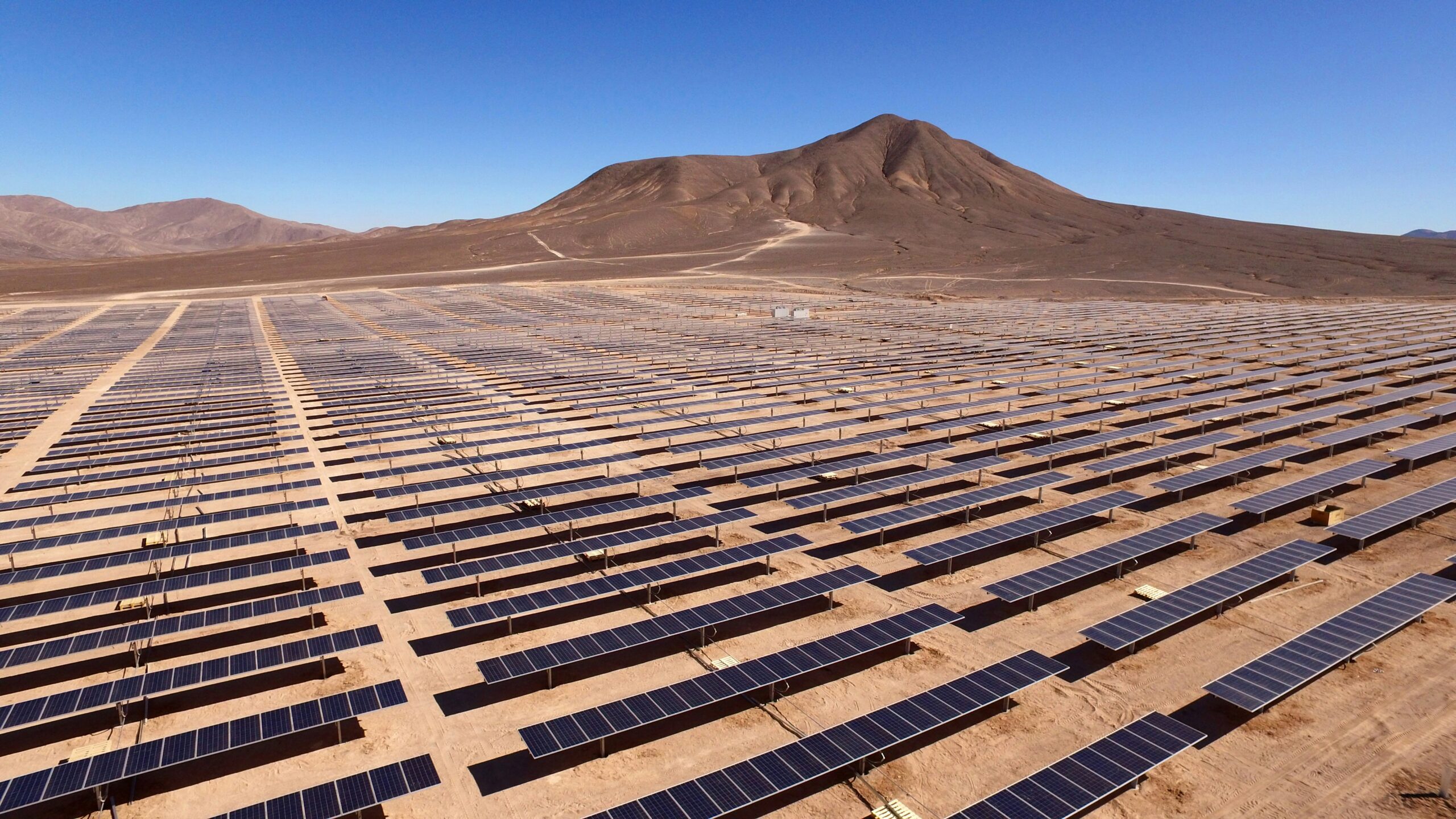
A large-scale solar plant in the Atacama Desert, Chile — one of the greatest solar resources on the planet.
By Juan Daniel Correa – Energía Limpia / Clean Energy
The energy transition has stopped being a distant horizon and has become a present filled with urgent decisions. And at this decisive moment, the eyes of Latin America —and of much of the global energy sector— are fixed on Santiago de Chile.
The Future Energy Summit Chile 2025, to be held on November 26 and 27 at the InterContinental Hotel in Santiago, will not be just another gathering. It will be the laboratory where the Southern Cone’s energy maturity is tested, the thermometer of its tensions, and the space where technical, regulatory, and financial pathways toward 2026 will begin to take shape.
A few weeks ago, in Clean Energy I published an analysis of what the Bogotá edition left behind: a sector beginning to recognize itself in its data and its tensions, but also in its deeper aspirations. There I described how Colombia —amid challenges and possibilities— is beginning to look further ahead with greater maturity. You can read that article here: Future Energy Summit 2025: Colombia’s Energy Transition at Its Electrical Turning Point.
Now, the conversation moves south and takes on a different scale: if Colombia is entering a strategic phase, Chile is already in a structural one. Whatever is discussed, announced, or questioned in Santiago will influence regulators, companies, financiers, governments, and actors across the region.
Chile: From Promise to System Engineering
For a decade, Chile was one of the world’s leading examples of renewable penetration. But the country has reached a point where the challenges are no longer about how much clean energy is generated, but about how it is integrated, how it moves, when it is used, and under which rules the system operates.
Curtailment volumes —solar and wind energy wasted due to lack of transmission or flexibility— have become historic for the region. For Ana Lía Rojas, Executive Director of ACERA, the diagnosis is unequivocal:
“Storage will be crucial for managing the system and fully taking advantage of the renewable energy we are already producing.”
— Ana Lía Rojas, Executive Director, ACERA
From the investment perspective, the message is similar. David Ruiz de Andrés, CEO of Grenergy Renovables, put it this way when announcing one of the world’s largest battery projects in Chile:
“Chile is recognized for its solar potential and its commitment to decarbonization. It is one of the most promising markets for massive deployment of solar energy and storage.”
— David Ruiz de Andrés, CEO, Grenergy Renovables
Both point toward the same idea: Chile does not need more sun; it needs more system.
In parallel, a well-known phrase from Elon Musk —beyond affinities or aversions— has resurfaced in energy debates:
“Solar power will, by far, be the biggest source of energy for civilization.”
— Elon Musk
In the Atacama Desert, that statement is not a metaphor: it is a physical fact.
Solar radiation is so abundant that there is no doubt about the resource; the question is no longer whether solar will dominate the energy matrix, but how to bring that future into the present without collapsing the grid, slowing investment, or diluting climate ambition.
That “how” will be the core of FES Chile 2025.
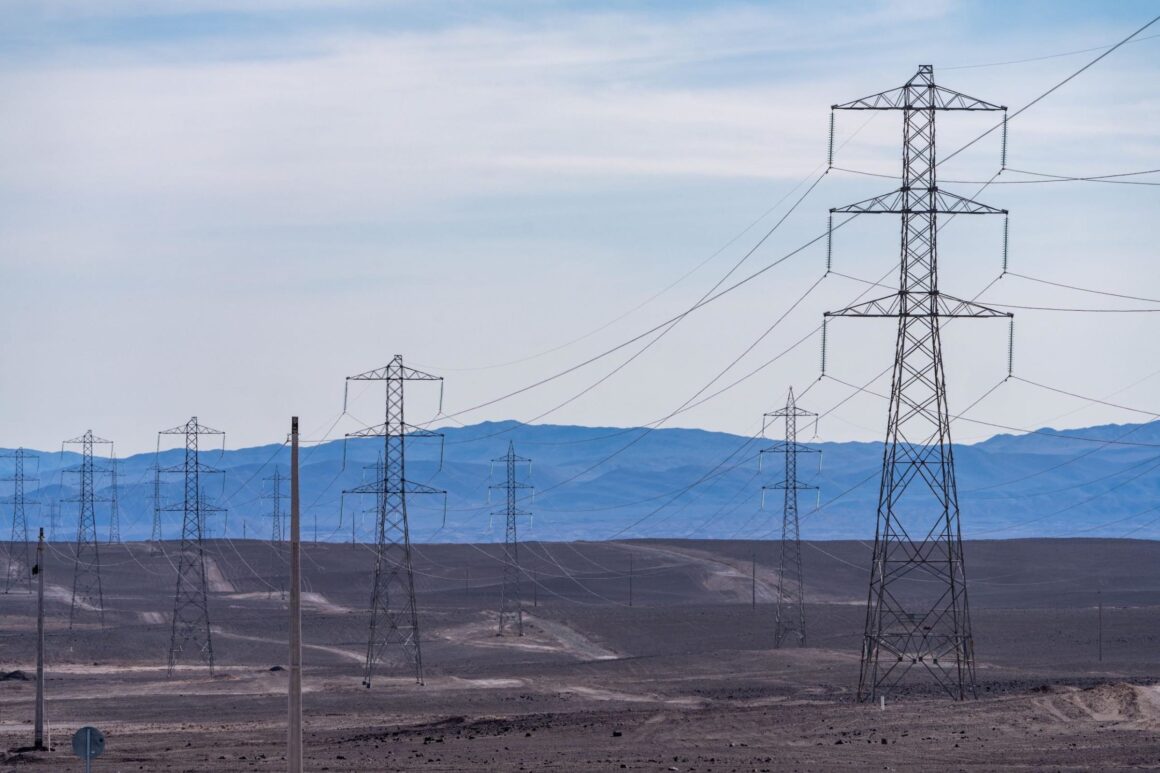
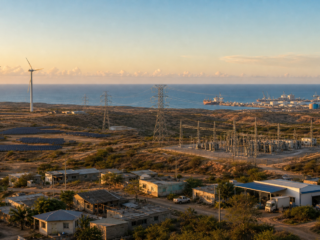
High-voltage transmission towers in the Atacama Desert, standing ready to carry renewable energy toward the country’s main consumption centers.
Four Forces That Will Shape the Conversation in Santiago
1. Grids and Infrastructure: The New Bottleneck
Chile faces a deeply modern paradox: clean energy abounds, but it doesn’t always have a way to travel.
The solar north is, in practical terms, disconnected from major consumption centers. Transmission congestion, delays in new lines, and the lack of flexibility turn infrastructure into the real frontier of the transition.
At a recent forum, Alfredo Solar, Regional Manager for the Southern Cone at Atlas Renewable Energy, summarized it this way:
“We need transmission lines to be built quickly. Energy must travel from where the resource is to where consumption happens.”
— Alfredo Solar, Atlas Renewable Energy
2. Storage: The Element That Will Determine the Speed of the Transition
If the previous cycle was solar + wind, the next will be solar + wind + batteries.
Chile is emerging as one of the most dynamic storage markets globally. The BESS pipeline, hybrid schemes, and new business models prove it.
In a recent intervention, Santiago Blanco, Executive Vice President of DNV Energy Systems LATAM, stated:
“Chile is one of the most promising markets in the world for integrating solar energy and storage.”
— Santiago Blanco, DNV Energy Systems
And Ana Lía Rojas reinforced the idea:
“Storage is not optional: it is the tool that will bring stability to the electric system.”
— Ana Lía Rojas, ACERA
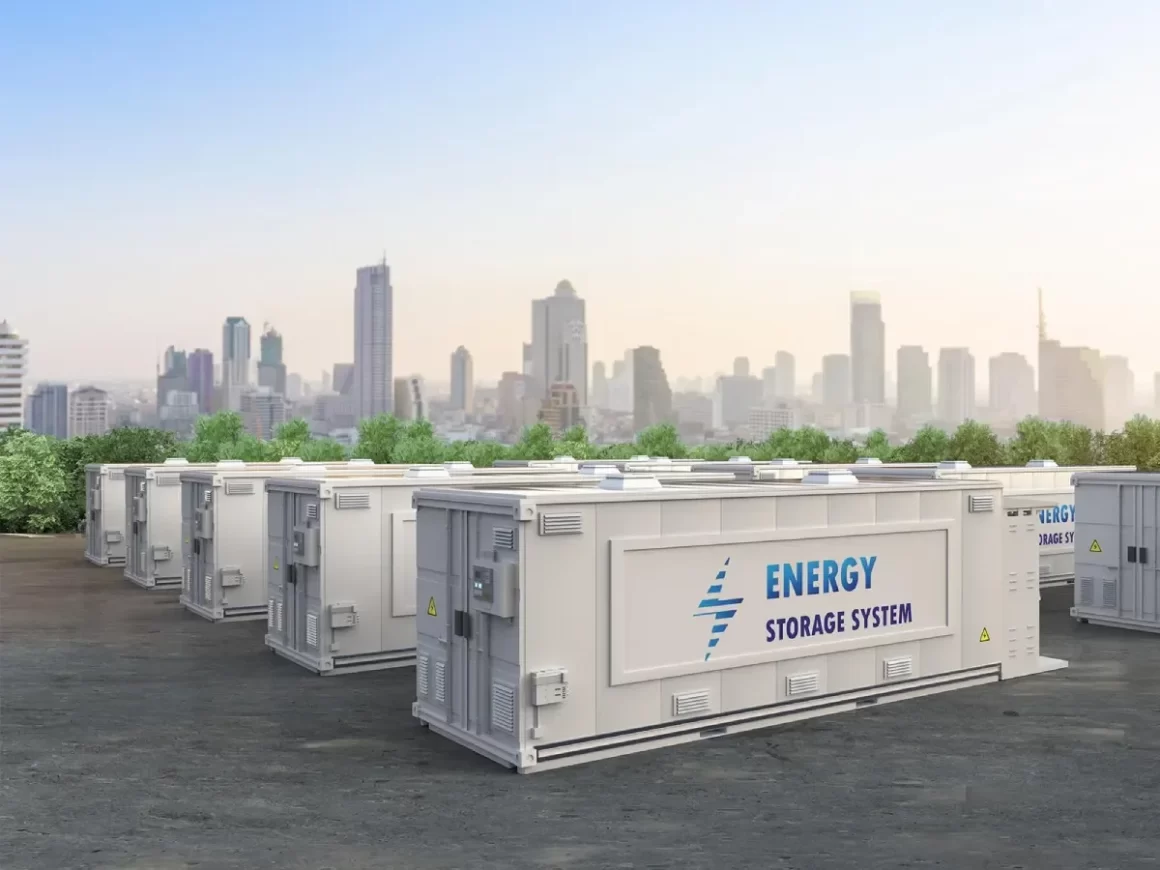
Containerized battery energy storage system (BESS): precision engineering that silently holds the energy that will move the future.
3. Rules of the Game: Regulation for a New Energy Cycle
No energy transition stands on technology alone. It requires intelligent regulation capable of recognizing the value of flexibility, variability, and the services that keep the grid stable.
Among the priorities shaping the debate:
- fair remuneration for storage,
- more accurate price signals,
- flexibility and demand-response schemes,
- stability for capital-intensive investments,
- coherence between climate targets and the system’s operational reality.
4. Regional Integration: Chile, Colombia, and the Latin American Energy Ecosystem
What is decided in Chile will resonate beyond its borders.
Latin America —even if it does not always view itself clearly— is beginning to shift toward an integrated logic, where electric systems communicate, markets interconnect, and the transition takes on a regional scale.
As Mauricio Osses, Chilean energy expert and professor at Universidad Técnica Federico Santa María, recently reflected:
“Latin America does not need to replicate the European path; it needs to strengthen its own complementarities. Integration is a technical and economic opportunity that is already maturing.”
FES Chile will be one of the spaces where that idea —real synchronization between countries, sectors, and visions— begins to take tangible form.
A Summit That Will Connect Santiago With the Entire Region
The Future Energy Summit Chile 2025 will take place on November 26 and 27 at the InterContinental Hotel in Santiago, bringing together decisive voices of the regional energy sector.
Featured speakers include Andrés Rebolledo, former Chilean Minister of Energy and Executive Secretary of OLADE; Claudia Sotelo, Head of Green Hydrogen at Enel Chile; Daniel Salazar, specialist in Andean energy integration; Aldo Mardones, Transmission Manager at Coordinador Eléctrico Nacional; and private-sector leaders such as Javiera Aldunate (AES Andes), Roberto Bianchi (Statkraft Chile), and Emilio Santelices, promoter of energy transition projects with territorial impact.
They will be joined by executives and technical teams from Colbún, Generadoras de Chile, Engie, Mainstream Renewable Power, Acciona, Siemens Energy, Sunco, ISA Interchile, H2 Chile, and many others.
Agenda, location, and registration:
👉 https://live.eventtia.com/es/fes-chile
Livestream for Latin America:
👉 https://www.youtube.com/@futurenergysummit
At Clean Energy, we will follow the summit with our characteristic perspective: technical, strategic, and creative — attentive to the movements that define the region’s energy transition.
Our role is not simply to document what happens: it is to interpret, connect, and project — to give context to events and meaning to the signals that anticipate where the sector is heading.
2026: When the Future Stops Waiting
2025 has been, above all, a year of diagnostics.
2026 must be a year of decisions.
Decisions about grids and transmission, about how and where to deploy storage, about what to electrify first, about how far to go with regional integration, and about how much coherence we are willing to embrace between discourse and action.
In that sense, FES Chile 2025 will be a preview, but also a mirror: it will show —with a certain harshness— how far we have advanced, and at the same time reveal what remains to be built in Chile, in Colombia, and across Latin America.
As in the best stories —the ones that don’t announce from the start that they will be unforgettable— there is a moment when the reader senses that something is about to change.
In Latin America’s energy transition, that moment looks very much like what will unfold in Santiago.
At that edge where the present sharpens against the future, energy stops being just a demand curve or a generation park and becomes something more: narrative, decision, shared direction.
Something moves.
Something redefines itself.
Something begins in a different way.
And from Colombia, with our eyes on the entire region, Clean Energy / Energía Limpia will be there to read that moment, connect it to other stories, and tell it with the depth that a future that can no longer wait truly demands.
Bibliography & Sources Consulted
Energy Transition & Latin American Context
- IEA – Latin America Energy Outlook 2024.
- Inter-American Development Bank (IDB) – Reports on regional energy integration.
- ECLAC (CEPAL) – Just Energy Transition in the Andean Region.
- OLADE – Latin American Energy Outlook 2024.
- Official reports (2023–2024) from the Ministries and Energy Agencies of Chile and Colombia.
Perspectives on Chile & the Electric System
- Coordinador Eléctrico Nacional (Chile) – Operational data and curtailment reports (2023–2024).
- ACERA – Chilean Association of Renewable Energies & Storage: Public statements and briefings by Ana Lía Rojas.
- Grenergy Renovables – Corporate communications and public remarks by David Ruiz de Andrés on solar and storage deployment in Chile.
- Atlas Renewable Energy – Statements by Alfredo Solar on transmission and grid expansion.
- DNV Energy Systems LATAM – Interviews and analyses by Santiago Blanco on solar + storage integration.
- Official analysis and documents from Future Energy Summit (FES) Bogotá 2025 and FES Chile 2025.
Voices & Testimonies Cited in the Article
- Ana Lía Rojas – Executive Director, ACERA: commentary on storage and system stability.
- David Ruiz de Andrés – CEO, Grenergy Renovables: insights on solar potential and storage investment in Chile.
- Alfredo Solar – Atlas Renewable Energy: reflections on the urgency of transmission expansion.
- Santiago Blanco – DNV Energy Systems LATAM: assessment of Chile as a leading market for solar + storage.
- Mauricio Osses – Universidad Técnica Federico Santa María: perspectives on regional energy integration.
- Elon Musk – Public statements on X/Twitter (2023–2024) regarding the future dominance of solar and battery technologies.
Images Used in This Article
Atacama Solar Field
Author: Science in HD
Source: Unsplash
URL: https://unsplash.com/photos/NpTbVOkkom8
Atacama Transmission Lines
Source: Dialogue Earth
URL: https://dialogue.earth/en/energy/391722-chiles-longest-power-line-speed-up-renewables/
BESS – Containerized Battery Energy Storage System
Source: Boxhub
URL: https://boxhub.com/resources/containerized-battery-energy-storage-system-bess
Internal Reference
- Juan Daniel Correa – Clean Energy / Energía Limpia
Future Energy Summit Bogotá 2025
https://energialimpia.co/es/future-energy-summit-2025/