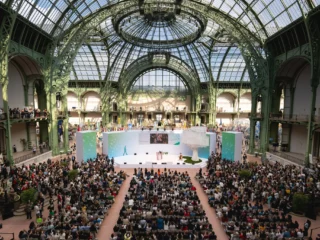
We followed the event from afar to extract useful signals. FES Iberia 2026 (Madrid, February 12) placed a new conversation at the center of Europe’s power sector: system integration, market rules and energy storage as operational infrastructure for renewable deployment.
The transition keeps advancing, but the conversation is shifting — from expansion to how the system actually works.
Deciding when and how much a kWh is worth
For years, the key question was how much clean energy could be produced. Today, two new variables define the discussion: timing and price.
A common example in solar-heavy systems:
• 1:00 pm → excess generation → electricity can be worth close to €0 or even turn negative.
• 8:00 pm → supply tightens → the same kWh may be worth 10–20 times more.
Electricity no longer carries a uniform value throughout the day. Storage makes it possible to shift energy in time — store when supply is abundant, deliver when demand rises.
The value of a kWh increasingly depends on when it reaches the grid.
Storage: from nice to have to infrastructure
In Madrid, the Renewables & Storage edition positioned storage as a cross-cutting enabler: technology integration, regulatory frameworks, financing and hybrid business models.
Discussions around solar-plus-storage brought together industrial and technology players to focus on operating power systems under volatile prices and stressed grids. The conversation is moving from installing capacity to operating systems.
From installation sprint to system order
The Iberian market provided the backdrop: grid pressure, hours of zero or negative prices, and tighter project economics. Attention shifted toward optimization, stability and market design.
The transition is entering a phase where the performance of the power system as a whole becomes central.
Technology, regulation and finance in the same equation
This new phase sits at the intersection of capacity mechanisms, regulation and investment signals. Flexibility emerges as an economic, technical and regulatory category.
Energy is no longer discussed in silos. It is discussed as a system.
A conversation that resonates in Latin America
Spain has become a fast-moving laboratory for renewable integration. The sequence becomes clearer: expansion, integration and flexibility as a business model.
In Latin America — where renewable deployment continues to accelerate — this conversation is starting to sound familiar. It will soon speak with a local accent.
The energy transition keeps moving forward. With each stage, the narrative shifts away from announcements and closer to the inner workings of the power system. And it is there, in the engine room, where change stops being announced and starts operating.
Sources consulted
Future Energy Summit — official event information
https://futurenergysummit.com/
Strategic Energy Europe — European energy sector coverage and analysis
https://strategicenergy.eu/fes-iberia-kicks-off-2026-renewables-agenda-with-focus-on-solar-and-storage/
https://strategicenergy.eu/regulation-storage-and-capex-the-road-to-fes-iberia-2026/
Energía Estratégica Storage — Spanish power market and storage context
https://energiaestrategicastorage.com/espana-entra-en-la-era-del-almacenamiento-gestionado-ejecutivos-reclaman-reglas-claras-y-redes-modernas-para-atraer-inversion/