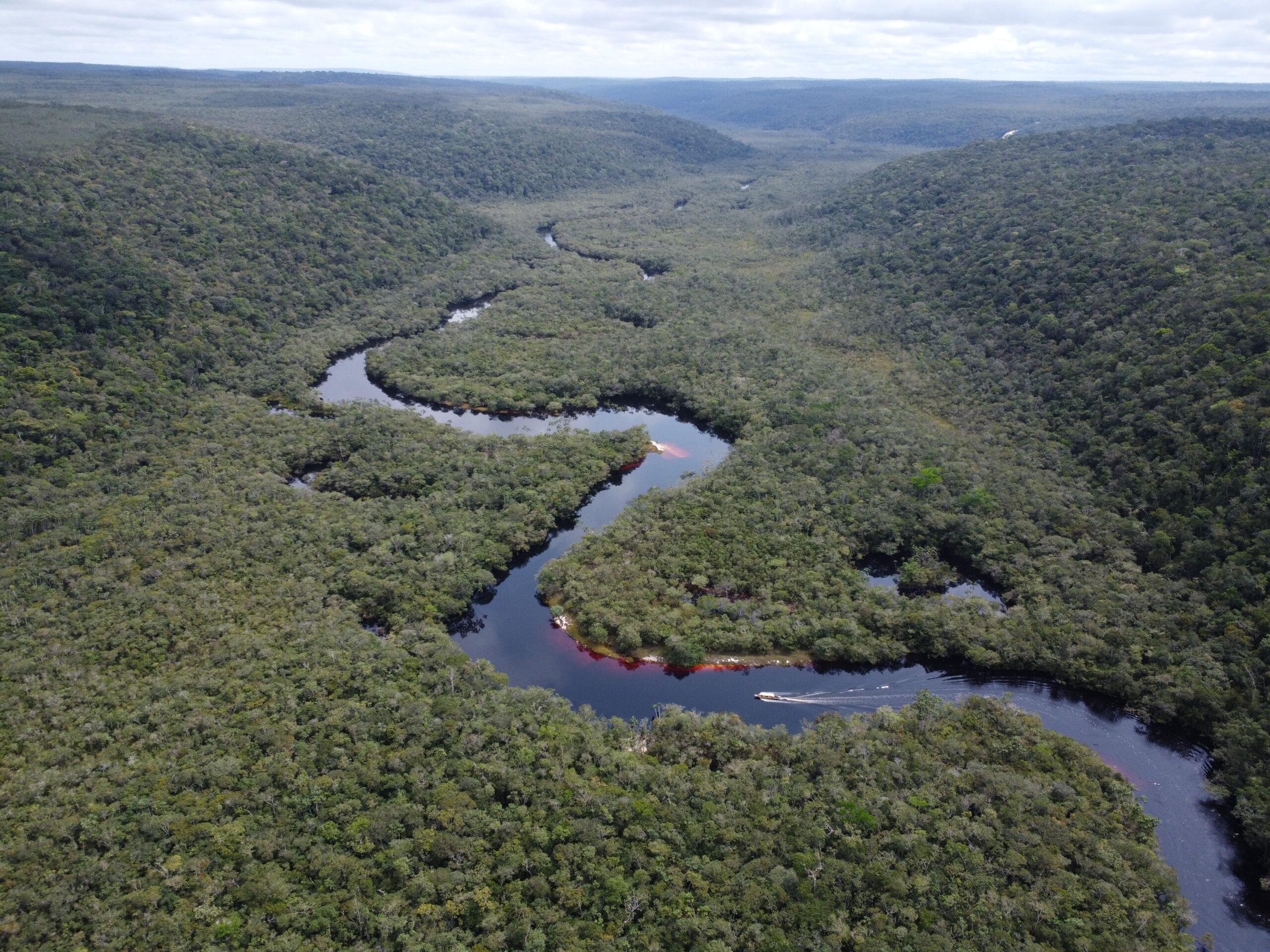
Caquetá River, Colombian Amazon — a landscape that illustrates large-scale ecological connectivity and territorial resilience. Photo: Niko Jacob.
Carbon markets marked the moment environmental risk entered financial architecture at scale.
For the first time, emissions were translated into financial exposure. Forests, soils and restoration projects became part of capital allocation decisions. Climate mitigation was no longer only a policy ambition; it became an investment category.
But markets evolve under scrutiny—and carbon markets have been scrutinized intensely.
Debates around additionality, permanence, leakage and governance have not weakened the system; they have accelerated its maturation. Investors are no longer satisfied with a single metric measured in tons of CO₂. The question has shifted from “How much carbon?” to “What system is being preserved, and how resilient is it?”
This is where biodiversity becomes economically relevant.
Not as a substitute for carbon markets, but as their complement—and increasingly, as their credibility anchor.
Carbon will continue to function as the backbone of mitigation finance. Biodiversity expands the scope of what mitigation must protect.
Carbon Measures Efficiency. Biodiversity Measures Durability.
From a financial standpoint, biodiversity is not an abstract environmental value. It is a stabilizing variable.
More biodiverse ecosystems are generally more resilient to climate volatility. They regulate water cycles, stabilize soils, sustain productivity and reduce long-term ecological risk. In portfolio terms, biodiversity behaves less like a reputational benefit and more like systemic risk management embedded in the asset.
Carbon measures emissions efficiency. Biodiversity measures ecological durability.
Together, they shift the conversation from isolated mitigation toward structural resilience.
A Market That Is Expanding Its Questions
Climate commitments are being evaluated through a broader lens. Standards are tightening. Disclosure frameworks increasingly incorporate nature-related financial risk. Corporate climate strategies are now assessed not only by emissions trajectories, but by ecological depth.
This does not signal the decline of carbon markets. It signals their integration into a more comprehensive environmental finance architecture.
Biodiversity credits—still early, uneven and far from standardized—represent an attempt to quantify ecological value beyond stored carbon. Their viability will depend on discipline.
Without rigorous methodologies, governance alignment and long-term monitoring, they risk fragmentation and speculation. With institutional design and conservative baselines, they can channel capital toward territories that sustain both ecological integrity and economic productivity.
Latin America Is Structural, Not Peripheral
Nowhere is this shift more consequential than in Latin America.
The region contains some of the most biodiverse ecosystems on the planet. In the logic of climate finance, this is not peripheral—it is structural. But structural importance requires structural design.
Poorly constructed biodiversity markets could replicate inefficiencies and erode trust. Well-architected ones could reinforce conservation economics, strengthen territorial governance and provide durable incentives for stewardship.
The distinction lies in architecture.
Architecture Over Hype
The biodiversity conversation risks oscillating between romantic environmentalism without financial rigor and financial engineering without ecological grounding.
Credibility will depend on transparent indicators, conservative assumptions, measurable outcomes and governance frameworks that are legible to capital and legitimate within territories.
Biodiversity is not merely a co-benefit of carbon finance. It is the ecological infrastructure that underpins long-term climate stability.
The question is not whether carbon markets will continue. They will.
The question is whether climate finance will remain narrowly defined—or evolve into a system that recognizes resilience as an economic variable.
Carbon marked the beginning.
Biodiversity may determine the maturity of the system.
And maturity, ultimately, is what capital rewards.