Entering The New Tech Wave
For most of my life, I believed the factory of ideas lived in the human brain.
That belief shaped my work long before artificial intelligence entered the conversation. In 2010, I wrote The Factory of Ideas (La Fábrica de Ideas), a book in which I argued that creativity is not magic but discipline — curiosity under pressure, observation sharpened by doubt, the ability to connect what seems disconnected and turn thought into action. The brain was the workshop; language, one of its finest tools.
I still believe that.
But then the machine began to write.
What I felt first was not fascination. It was shock — followed quickly by something close to panic. Writing had always been one of the few things I knew how to do well. I am a full-time creative and writer — literally. It is my craft, my territory — where I have spent years learning to hear sound and silence within a sentence.
Then, one day, a machine answered with a paragraph.
Clear. Structured. Fluent.
Not perfect. But close enough to unsettle the order of things.
A brutal question followed: if it can do this, what exactly is left for the writer? Has writing — my greatest advantage — become something anyone can generate with a prompt?
For a moment, I wondered whether it still made sense to keep writing.
Then curiosity intervened.
Instead of walking away, I stayed. I tested. I argued with the machine. Slowly, confrontation turned into a relationship.
Creative, certainly. But also something stranger — a dialogue. I carry experience, judgment, intuition, style. The machine adds speed, variation, relentless generation. I push a thought; it pushes back. Sometimes it fails. Sometimes it reveals something I had not yet managed to see.
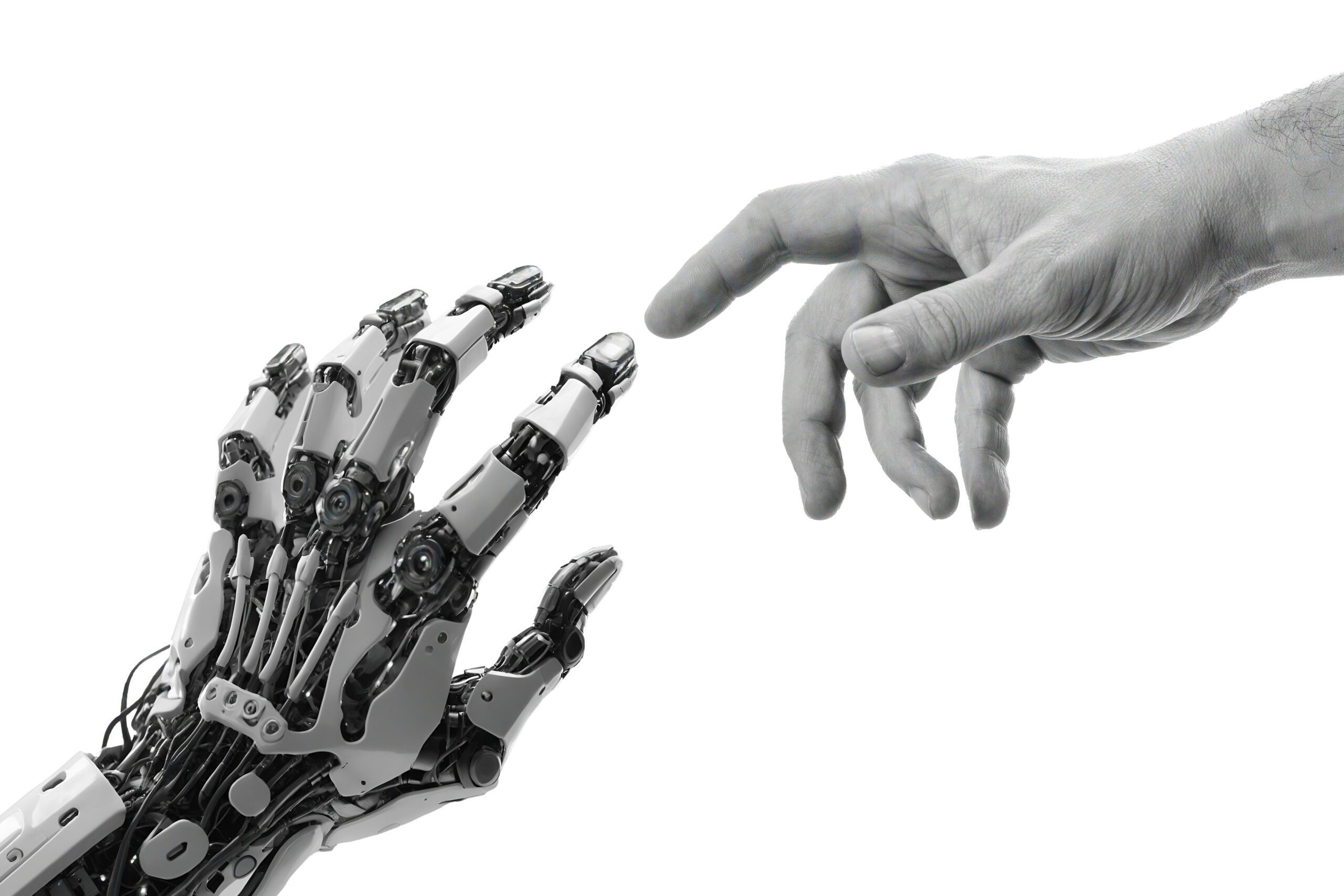
The machine did not replace the factory.
It entered it.
Years ago, in The Factory of Ideas, I argued that creativity requires breaking the artificial wall between art and strategy, intuition and reason. Artificial intelligence does not invalidate that idea. It intensifies it. Machines generate language. What they do not generate is judgment — the human capacity to decide what matters.
That difference may prove decisive.
Two centuries ago, Mary Shelley saw something similar. In Frankenstein, the tragedy is not that Victor Frankenstein creates life, but that he abandons responsibility for what he has created.
That warning now feels uncomfortably relevant.
Artificial intelligence is rapidly entering science, infrastructure, medicine, energy systems, markets, governance, and culture. But this is not only AI. It is a broader convergence — robotics and synthetic biology — intelligence expanding into machines, and into life.
This is where The New Tech Wave takes form.
For me, it started with a paragraph on a screen.
Enough to provoke doubt. Enough to shake a profession. Enough to force a deeper question about whether the writer still had a place in the world.
My answer today is yes — not because nothing has changed, but because everything has.
Machines can generate language, but they do not carry experience, responsibility, memory — or the ability to turn information into meaning. They can accelerate sentences; they cannot decide why those sentences should exist. That remains our work.
The future will demand more from writers, not less. The lazy writer falls behind. The writer without a voice, too. While the writer who thinks deeply, risks ideas, and treats creativity as discipline may find something unexpected in this new landscape: not extinction, but amplification — a kind of super-writer.
But only under one condition.
The factory of ideas must remain under human direction. If we surrender writing —and with it, judgment— we will produce more language than ever and understand less than ever.
Machines will keep writing.
And we will forget how to think.