By Juan Daniel Correa Salazar, in collaboration with BNamericas
Colombia changed governments on a Friday. Three days later, its reality changed.
On August 10, the ground shook. Colombia is mourning its dead, searching for the missing, caring for the injured, and standing beside those who lost their homes, their livelihoods, or someone they loved. Preliminary losses are estimated at nearly COP 30 trillion. Behind that figure are families still afraid to sleep and communities only beginning to grasp what happened.
This is the starting point for the new administration—and for the entire country: a vast reconstruction effort, limited fiscal space, an economy in need of investment and confidence, and social and territorial divides deepened by the disaster.
The political transition has brought understandable hope. It follows a period marked by uncertainty and a strained relationship between government, business, and markets. As the saying goes, a new broom sweeps clean. In economics, that initial goodwill lasts only when it is backed by clear signals, stable rules, workable agreements, and the ability to deliver.
But as Colombia surveys the rubble, Tolima is burning.
Wildfires have already affected approximately 11,000 hectares. At the height of the crisis, more than 30 fires were burning simultaneously. In recent days, rainfall has reached only a fraction of normal levels, temperatures have risen, and river flows have declined.
Authorities attribute most of the fires to human activity. El Niño does not strike the match, but it dries the field where it lands.
The National Oceanic and Atmospheric Administration estimates a greater than 90% probability that El Niño conditions will persist through late 2026 and into early 2027, with a 69% chance of reaching historic strength between October and December. Its effects are already being felt in water supplies, agriculture, ecosystems, local water systems, and power generation—and could intensify in the months ahead.
The earthquake unfolded in seconds. El Niño builds over months.
Colombia must face both at once.
The Energy That Sustains What Matters Most
When the ground shook, failures and outages initially left roughly 18% of national electricity demand unserved. Operators restored nearly all service within the first few hours. That response demonstrated experience and an ability to act under pressure.
It also reminded us what energy is for.
Energy means a hospital that stays open, water flowing through a pipe, a communications tower still operating, medicine kept cold, and light in the place where a family that has lost its home must sleep.
Colombia generates most of its electricity from water. When rainfall declines, reservoirs fall and hydropower output drops. Thermal plants must then produce more electricity using natural gas and other fuels. To do so, they need both fuel and the financial resources to purchase it.
That is how the system is sustained through a dry season.
Solar generation has expanded rapidly, but wind power remains far behind despite the Caribbean region’s enormous potential. At the end of July 2026, Colombia had 5,081 MW of operational nonconventional renewable capacity: 3,844 MW from utility-scale projects and 1,237 MW from self-generation and distributed generation.
This represents a major increase from 2022 levels, but remains short of the “6 GW Plus” target set by the outgoing administration for the end of its term. More importantly, installed capacity does not by itself guarantee that electricity can be delivered when and where it is needed.
Solar and wind can diversify the power mix and help preserve water in reservoirs. But the electricity they produce requires transmission networks to reach consumers, storage to shift supply across time, and backup capacity when sunlight, wind, or water are insufficient.
This is where Colombia’s central tension becomes clear. Generation capacity can be added in a matter of months, while the transmission lines needed to carry that electricity can take years to plan, consult, license, finance, and build.
The country’s grid expansion plan includes 65 transmission projects. Yet, according to the UPME, only around one-third are progressing on schedule; another third face delays of up to a year, and the remainder are more than 12 months behind.
There is no shortage of generation projects. The challenge is connecting them to the system in time.
Natural gas is part of the required backup. Sirius—a major deepwater discovery in the Colombian Caribbean being developed by Petrobras and Ecopetrol—is estimated to contain roughly 6 trillion cubic feet of gas in place and could substantially expand domestic supply. First production, however, is not expected until 2030. Before then, licensing, consultations, infrastructure, and project execution must move forward.
Tomorrow’s gas cannot keep today’s system running.
Clean energy is therefore about more than renewable generation. It means producing power with lower impacts, transporting it efficiently, storing it when possible, using it wisely, and ensuring that essential services remain available at all times.
The exact mix can be debated. What matters is that the entire system works.
Colombia Has What It Takes
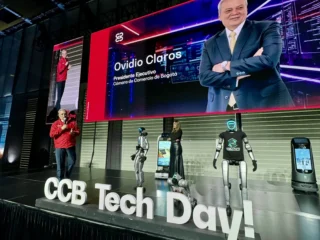
Eleven days before the earthquake, BNamericas and Clean Energy brought together business leaders, experts, and sector representatives to examine the conditions the incoming government would inherit.
The meeting was meant to produce a set of conclusions and recommendations. The earthquake changed the scale of the conversation. Questions about investment, energy, and infrastructure also became questions about response capacity and reconstruction. Publishing the original conclusions as though Colombia’s circumstances had not changed would have meant ignoring the reality now shaping every decision.
This article is the result of that reassessment. Part of Clean Energy’s responsibility is to place information in context, revise its analysis when circumstances change, and ask again what the evidence means for the country.
Andrés Pardo of XP Investments described an economy with limited fiscal room, persistent inflationary pressure, and investment in need of renewed momentum. His analysis brought optimism down to earth: Colombia retains important strengths and opportunities, but capturing them will require sounder public finances, renewed investment, and restored confidence.
BNamericas approached the landscape at three different scales.
Juan Gamboa placed Colombia within a broader regional cycle. Latin America has enormous potential, continues to attract international banks, and is once again becoming a central focus for global investors.
Carlos Gaviria Duque mapped the national project landscape: an active pipeline worth more than US$188 billion, comprising close to 460 projects across six strategic sectors.
Michael Place focused on energy: a system with less room to maneuver, growing firm-energy shortfalls, and 225 active projects worth US$45.1 billion—only 26 of which were under construction.
An active project pipeline includes initiatives at many different stages. It does not mean that all of them have secured financing or that construction has begun. The figures reveal a paradox: Colombia does not lack projects, resources, or interest. The distance lies between what has been planned and what is being built.
In Clean Energy’s presentation, I proposed looking at that distance through three clocks: climate, measured in months; power, in headlines; and infrastructure, in years.
Climate moves in seasons. A few months of drought or below-average rainfall can lower reservoir levels, place additional pressure on the electricity system, and alter the country’s immediate needs.
Nature can also move far more abruptly. The presentation spoke of climate in months. The earthquake forced us to think in seconds: the time it takes for the ground to move, a territory to change, and a disaster to begin. The first decisions must then be made in minutes, while the response unfolds over hours and days.
Power moves at the speed of headlines. An election, an announcement, or a crisis can quickly change government priorities, reshape the public conversation, and alter the signals received by companies and investors.
Infrastructure follows a different clock. A transmission line, power plant, gas pipeline, or highway requires planning, consultation, licensing, financing, and construction. Years may pass between the original decision and the moment the asset begins operating.
Three clocks. One country.
The disaster set all three in motion at once. Nature changed reality in seconds. Political priorities shifted immediately. Yet the infrastructure required to meet new needs and sustain reconstruction will continue to move at the pace of years.
That is the challenge: something postponed for years can become indispensable within hours. A crisis may change priorities overnight, but it cannot automatically shorten the time required to build a power line, restore a road, or secure essential services.
The tragedy exposed Colombia’s vulnerabilities. The response also demonstrated the experience, knowledge, and capacity the country has built over time.
Colombia has what it takes. It faces urgent needs and serious constraints, but it also has projects, companies, natural resources, experienced institutions, and people capable of delivering. The challenge is to make those capabilities work as a system.
We generate electricity in places where the networks needed to carry it do not exist. Projects remain stalled in regions that urgently need investment. Capital seeks opportunities, while many communities enter the conversation only after decisions are already under way. Information exists, but too rarely reaches decision-makers in full and on time.
Each sector understands its own piece. Colombia struggles to see—and connect—the whole.
The country has spent decades talking about coordination. What is different now is that the cost of postponing it is visible. Climate risk, energy security, public finances, and reconstruction ultimately converge in the same territories, budgets, and projects.
Coordination means ensuring that information, resources, and decisions arrive together—and on time.
A Country That Responds
After the earthquake, another Colombia began to move.
Emergency services, public authorities, the Armed Forces, medical teams, companies, civil society organizations, and thousands of citizens responded from every corner of the country.
By August 16, the Bogotá city government and the Colombian Red Cross had dispatched 1,337 metric tons of humanitarian aid in 109 shipments to six affected cities.
The private sector also mobilized rapidly. The ANDI-led Empresas Unidas por Colombia—Companies United for Colombia—campaign reported COP 201.637 billion in cash and in-kind contributions. The organization set a target of COP 500 billion and placed the funds in a trust to oversee their use.
Other commitments were announced alongside the campaign. The Fundación Santo Domingo and Grupo Aval each pledged COP 150 billion. Grupo Argos announced COP 100 billion. These figures should not be treated as a single cumulative total, as some commitments may be connected to broader initiatives and others remain subject to disbursement. Even so, their scale shows the capacity of Colombian business to act when circumstances demand it.
International support also arrived. The Howard G. Buffett Foundation pledged US$2 million, while Shakira’s Pies Descalzos Foundation began raising funds to rebuild a school in one of the affected communities.
Solidarity also happens far from the cameras. Thousands of people have cleared debris, cooked for strangers, lent vehicles, collected donations, or placed their skills at the service of those who lost everything. In Tolima, farmers, firefighters, soldiers, and volunteers have confronted the flames while waiting for reinforcements.
Now another phase begins. Announced commitments must become actual resources. Aid must reach the people who need it. Reconstruction will bring difficult decisions about priorities, transparency, and the use of public and private funds.
The response offers powerful evidence: when there is a shared purpose, Colombia can bring together capabilities that usually remain scattered.
The challenge is to preserve that strength after the immediate emergency has passed and the long, quiet, less visible work begins.
Rebuilding with Energy
It is still too early to know how each community should be rebuilt. The answers must begin with the people who live there, the conditions of the territory, technical knowledge, and the resources available.
But we can already ask better questions.
Can rebuilt homes be safer, more efficient, and capable of meeting essential energy needs during an outage? Can hospitals and water systems continue operating through prolonged interruptions? Can schools become temporary shelters, communication points, and centers of assistance? Can communities participate from the outset in the decisions that will transform their territories?
Reconstruction is an opportunity to reduce risk and prepare Colombia for future shocks. Energy is a central part of that task.
At the local level, this means combining dependable grid connections with distributed generation, batteries, efficient equipment, and backup power for critical services. Not every building requires the same solution. A rural health center, a city hospital, a school, and a family home have different energy needs and require different levels of resilience.
At the national level, Colombia must secure supply through El Niño while expanding renewables, storage, transmission, and energy efficiency. Thermal generation and natural gas will help sustain the system during this process. At the same time, new projects will require clear rules, environmental safeguards, and early community participation.
The discussion will involve legitimate disagreements over pace, priorities, cost, and risk. The task is to turn those differences into decisions that respond to the present while preparing for the future.
Speed matters, but so does the quality of what gets built. A rapid reconstruction that reproduces the same vulnerabilities will only postpone the next crisis.
Infrastructure must be designed with the territories and communities it will serve, not simply delivered to them.
The goal is not merely to replace what was lost. It is to rebuild with greater safety, resilience, and foresight.
Why Clean Energy Exists
I write about energy—and with energy: to understand Colombia, connect ideas, and turn knowledge into action.
When we look closely at energy, the whole country comes into view. We see the economy, the climate, technology, and territory. We also see those who make decisions, those who invest, those who bear the impacts, and those who expect every project to leave behind more than a physical asset.
Clean Energy was born from that way of seeing: connecting what Colombia usually treats as separate conversations.
We investigate, verify, and listen. We connect data to its moment, projects to people, and ideas to the possibility of making them real. When circumstances change, we revisit the analysis. Amid the noise, we look for the signals that support better decisions.
That is our role: to understand the whole, bring capabilities together, and help turn knowledge into results.
This essay completes a trilogy I have written to think through the moment Colombia is living. A Time to Gather the Stones was an invitation to recognize one another amid division. The Hour of the Tiger explored how politics, climate, and infrastructure move at different speeds—and asked whether Colombia should seriously consider moving the hands of the clock forward.
This is the third piece: Time to Move Colombia Forward.
To move Colombia forward is to ensure that information, resources, and decisions arrive together and on time. It is to turn projects into infrastructure, solidarity into sustained work, and confidence into a way of advancing.
I believe in Colombia because of what I have seen in its people, communities, companies, and institutions. The earthquake exposed our vulnerabilities. The response has also revealed our strength.
The country’s reality has changed.
What we do from this point forward will determine its direction.
It is time to move Colombia forward.
Sources
- Office of the President of Colombia — preliminary estimate of earthquake losses, August 12, 2026
- NOAA Climate Prediction Center — El Niño/Southern Oscillation Diagnostic Discussion, August 13, 2026
- Government of Tolima — initial assessment of 11,000 hectares affected by wildfires, August 15, 2026
- IDEAM — drought, rainfall, temperature, and river-flow conditions, August 17, 2026
- XM — initial impact of the earthquake on electricity demand and service restoration, August 10, 2026
- UPME — progress of renewable generation and transmission projects, July 31, 2026
- Ecopetrol — Sirius gas discovery and projected production timeline
- Bogotá Mayor’s Office — humanitarian aid dispatched to affected regions, August 16, 2026
- La República — private-sector contributions coordinated by ANDI, August 17, 2026
- El Colombiano — corporate commitments for reconstruction, August 14, 2026
- Associated Press — international donations and Shakira’s Pies Descalzos Foundation
- BNamericas and Clean Energy. Executive Briefing: Colombia 2026. Bogotá, July 30, 2026.
- Carlos Gaviria Duque. Infrastructure Project Pipeline in Colombia. BNamericas, 2026.
- Michael Place. Colombia Energy Outlook. BNamericas, 2026.
- Andrés Pardo. Colombia: The Macroeconomic Outlook. XP Investments, 2026.
- Juan Daniel Correa Salazar. Three Clocks. One Country. Clean Energy, 2026.