Don’t let the smoke distract us
By: Juan Daniel Correa Salazar
Clean Energy
www.cleanenergyplanet.org
A charged beginning
2026 opens under a lit sky. In our region, the light does not come from celebration but from geopolitics—with a proper name: Venezuela, Caracas, Nicolás Maduro. A bombing and an arrest are enough to remind us that the world moves through tension, and that energy is never detached from power.
That kind of beginning captures attention and accelerates opinions. The risk is getting trapped in the noise. That is why something less immediate and more necessary is required: looking beyond the smoke.
Not to ignore what is happening, but to understand what continues to move beneath the surface. Because while the world reacts in shock, the systems that sustain everyday life do not stop. It is there, away from the noise, that the direction of the year is defined.
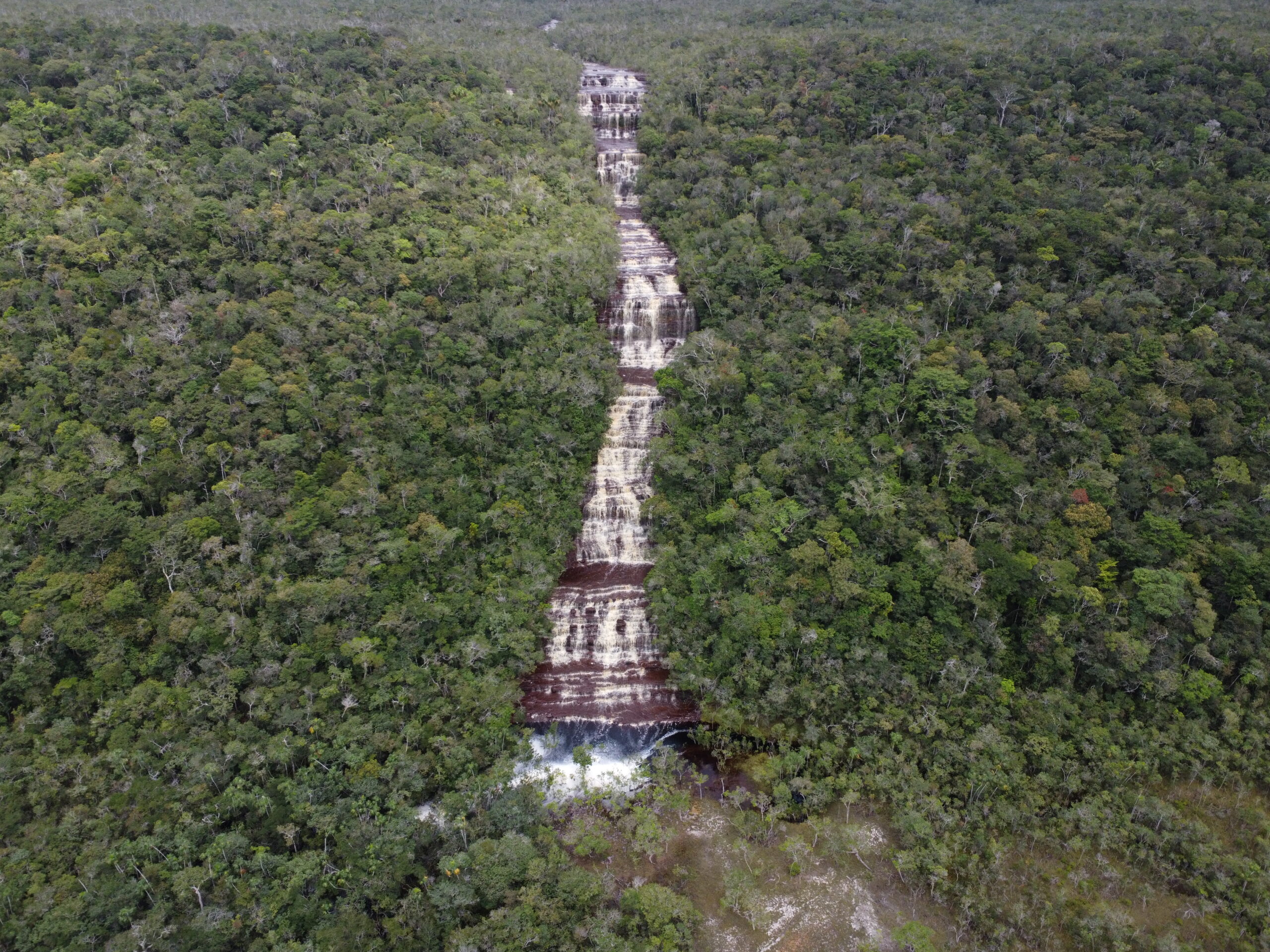
The image that opens this text—waterfall, water, and forest in the depths of Araracuara, Caquetá, Colombia—photographed by Niko Jacob for The Community Forests, reminds us that even when noise dominates, life keeps flowing.
Energy as a system, not a slogan
Energy is not a sectoral issue or a passing trend. It is the silent infrastructure that sustains cities, industries, food systems, transport, data, health, and culture. It is also economics: it defines costs, competitiveness, jobs, and stability.
Today, nearly 80% of the world’s energy supply still depends on fossil fuels. That fact is not ideological; it is structural. At the same time, change is evident: global energy investment now exceeds USD 3 trillion annually, and roughly two-thirds of new capital is flowing into clean technologies—renewables, electrification, grids, storage, and efficiency. This is not driven by climate romanticism, but by technological maturity, falling costs, and the growing risk of not changing.
Looking beyond the smoke means holding two ideas at once: the current system still depends on fossil fuels, and the system being built is increasingly clean. The transition is not an instant replacement; it is a deep reconfiguration.
Fossil fuels, transition, and realism
Fossil fuels are neither caricatures nor abstract enemies. They are central actors in the current system, with infrastructure, expertise, and fiscal weight. In the transition, they can play two roles: resist or transform.
Recent experience shows that transitions accelerate less through symbolic confrontation and more through intelligent design: clear regulatory signals, real emissions reductions, electrification where it is already competitive, orderly integration of renewables and storage, and efficiency as a priority.
In this context, what happens in Venezuela is not an isolated episode. It is a reminder that oil still carries political and economic weight, and that abrupt reordering sends shockwaves through prices, investment, and expectations. Reading that landscape calmly is part of looking beyond the smoke—understanding that the energy transition unfolds in an unstable world, not in a laboratory.
Efficiency: where the transition becomes real
When the transition moves from discourse to practice, one word becomes central: efficiency. Using energy better reduces costs, emissions, and system stress, while creating space for new solutions to scale.
In multilateral forums and international agreements—from COP28 to the latest energy roadmaps—countries committed to doubling the annual rate of energy efficiency improvement by 2030. Progress exists, but it remains insufficient. Policy sets frameworks and signals, but it does not close the gap on its own; often, it also generates noise. The difference is made in practice, through thousands of everyday decisions: better-insulated buildings, optimized industrial processes, efficient motors, smart lighting, active demand management, better-operated grids, and more conscious consumption habits.
Efficiency rarely makes headlines, but it defines outcomes. It cuts emissions, lowers costs, and frees system capacity. If 2026 is to matter, it must be a year when efficiency moves decisively from speech to daily practice.
Sustainability: an integrated logic
At Clean Energy, we approach sustainability as a connected system of decisions. Energy is a central axis, but not the only one. What also matters is how water is protected or lost, how materials are reused, how biodiversity keeps territories viable, how cities are designed to work better, and how economic models allow solutions to endure over time.
There is no viable energy transition without healthy territories, engaged communities, and economies that can last. Biodiversity is not a backdrop to the climate debate—it makes it possible. Water is not just another input—it sets the system’s limits and sustains life itself. The economy is not a side effect—it is what allows what works to scale and take root.
This is how we work at Clean Energy: by connecting ideas, technologies, and actions already in motion; by filtering out the noise to focus on what truly matters; and by reporting with rigor on what works—and what doesn’t—with a broad perspective and without dogma.
This has always been our approach. In 2026, it becomes even clearer: ideas only matter when they turn into concrete decisions and reach the ground where they truly count.
2025: a year that remains alive
What unfolded in 2025 did not end with the calendar. It remains active, dialoguing with the present and offering clues to what lies ahead. This is a reading of the year through the Clean Energy lens, built from some of the spaces where we were present—listening, learning, connecting ideas, people, and solutions.
Each of these moments can be revisited (by clicking on the entries). The articles remain alive, open, and full of messages, data, and lessons that resonate even more strongly today.
- ChangeNOW Paris brought solutions into action. More than a thousand active initiatives confirmed that the challenge lies in connecting, financing, and scaling. It was there that Clean Energy—formerly Energía Limpia para Colombia—assumed its current form and global outlook. Two articles capture that inflection point: Reflections on ChangeNOW 2025 and Sustainability, a manifesto and editorial statement of what Clean Energy is, and Darah Solutions Lab: Circular Fashion and Textile Sustainability from Saudi Arabia to Latin America, showing how design and creativity can connect the world—if we learn to look beyond the smoke.
- Climate Week NYC offered a moment of balance amid global noise. Its largest edition yet confirmed that sustainability, climate action, clean energy, and circularity remain active, even when power attempts to deny or attack them. In the city’s pulse, there was also space to pause and return to origins, as captured in Biomimicry Institute and the Equinox: When the Earth Breathes in Central Park—a reminder that we are only a small part of a far larger system.
- Future Energy Summit, in Colombia and Chile, revealed the region’s energy map: strong technical potential, growing leadership in renewables, and clearly defined bottlenecks in grids, regulation, financing, and execution timelines. That tension is explored in Future Energy Summit 2025: Colombia’s Energy Transition at Its Electric Hour and Latin America in Positive Tension: What FES Colombia and FES Chile 2025 Revealed.
- COP30 in Belém, deep in the Amazon and on ancestral territories, once again exposed the gap between what the planet expresses and what politics processes. COP30 Belém: When the Amazon Spoke Clearly and the World Responded with Noise captures that contrast.
- Carbon markets, particularly in conservation, mitigation, and biodiversity with and for communities that own their territories—work I have proudly pursued in recent years representing The Community Forests—are addressed in “The Carbon Market Will Bloom Again”: ASOCARBONO, a clear and forceful message.
- ExpoSolar Colombia 2025 showcased innovation in real operation. Solar energy appeared integrated into industry, construction, and mobility—not as promise, but as practice. Acesco and Alurack: Innovation and Sustainability, Cosostenible: A Bet on Solar Energy in Colombia, and Energía y Movilidad: Driving the Solar Transition in Colombia demonstrate solutions already working on the ground.
- Major cultural gatherings put sustainability to the test. Festival Estéreo Picnic 2025: A Different World Where Music and Sustainability Embrace showed how logistics, mobility, and consumption are reshaping collective experience. Festival Cordillera 2025: Music and Sustainability Beating at the Same Rhythm in Bogotá reinforced that pulse. And Trama: Weaving Hope for Sustainable Fashion in Colombia, awarded Most Sustainable Brand at Feria Vassar—with Clean Energy as jury—confirmed that this conversation is also built through design, production, and daily choices.
None of this expired with the calendar. These texts form a living archive that explains why 2026 does not begin from zero, but from experience in motion.

Sunset in Manhattan during Climate Week NYC 2025.
An image I captured as the river reflected the fading daylight; the Concorde and a tall ship evoked other ways of traveling and imagining progress. In the midst of the city that never stops, water, history, and mobility briefly converge. A necessary pause to reflect on the future we are building.
2026: the year moves into motion
The first four months do not define the entire year, but they do set rhythm and direction. There are moments and spaces—recommended by Clean Energy, among many others—that help read where decisions, investment, and priorities are heading.
- Future Energy Summit 2026 opens its tour with three stops that already shape the year’s pulse: Madrid (February 12, FES Iberia), Buenos Aires (March 4–5, FES Argentina), and Santo Domingo (April 20–21, FES Central America & Caribbean). The focus is on where projects succeed or fail: grids, storage, financial structuring, execution capacity, and regulatory bottlenecks. Less announcement, more connection.
- Future of Utilities: Energy Transition Summit (Amsterdam, March 18–19, 2026, SugarFactory) will focus on the intersection of technology, regulation, and capital to modernize Europe’s energy system—addressing grids, flexibility, storage, digitalization, security of supply, and integration of hydrogen and renewable gases, with a strong emphasis on implementation.
- Bogotá, through the Festival Estéreo Picnic (March 20–22, 2026, Simón Bolívar Park), becomes a living laboratory once again. With a diverse lineup—Tyler, The Creator; The Killers; Sabrina Carpenter; Lorde; Deftones; Peso Pluma; Young Miko; Doechii, among others—the city enters pulse mode. Music does not just sound; it measures how well we can make the massive work better.
- ChangeNOW Paris (March 30 – April 1) will once again gather solutions, capital, and public actors with scale ambition. As stated in ChangeNOW 2026: Where Solutions Meet and the Future Becomes Real, the focus is no longer on imagining scenarios, but on accelerating what works.
- European Climate Summit (Barcelona, April 14–16, Casa Llotja de Mar) will bring together policymakers, business leaders, and climate market professionals to deepen conversations on governance, carbon markets, and financing—with an emphasis on credibility and implementation.
These are not the only moments of the year. But they are early signals that help read the pulse of 2026: less declarative noise, more execution; fewer abstract promises, more systems working.
Looking beyond the smoke
Noise will not disappear. Neither will smoke. The world will keep shaking with crises and attention-grabbing headlines. The difference lies in where we choose to look.
Looking beyond the smoke means focusing on what matters: systems that work better, energy used intelligently, efficiency that reduces losses, water as a condition for life, biodiversity that sustains territories, and decisions that may not attract applause but define direction. The future is not improvised—it is built with data, judgment, and sustained action.
2026 has already begun. What is at stake is not a narrative, but how we live, produce, move, and what we leave standing.
We move forward without fanfare or distraction—reading the world carefully, connecting solutions that work, and pushing decisions that matter.
Clean Energy is in motion.
And we are here, walking alongside that path.