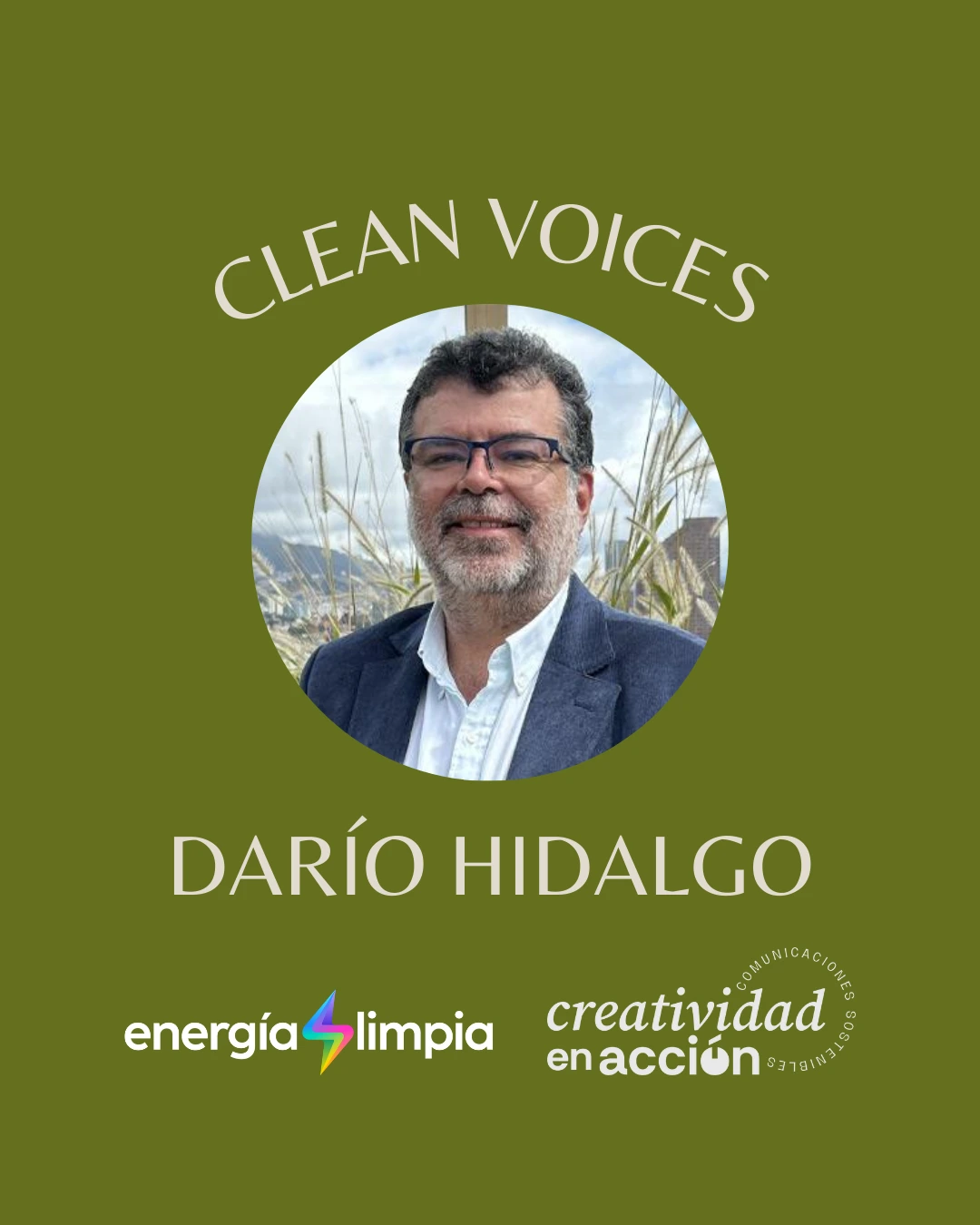
For years, mobility in Bogotá has been a constant topic of debate. Congestion, pollution, and road accidents have dominated the agenda, but amidst these challenges, the city has made notable progress toward a more sustainable transportation model. As Clean Energy, we spoke with Darío Hidalgo, an expert in urban mobility, to learn about the trends, achievements, and challenges that will define the future of how we move in the capital.
Bogotá, a city that pedals more
In just two and a half decades, the bicycle has gone from being a marginal mode of transport to accounting for almost 7% of daily trips in Bogotá. A transformation that, for Hidalgo, is not only positive but also positions the capital as a regional benchmark. “The use of the bicycle has grown a lot… something we didn’t have 25 years ago,” he highlights.
The challenge now is to sustain this growth with safe infrastructure, proper maintenance of bike lanes, and a more favorable public attitude toward active mobility.
Trends that will shape the future
Hidalgo identifies three forces that will guide mobility in the coming years: demand management, electrification, and the expansion of small electric vehicles.
On the first point, he cites the case of Manhattan, where a congestion charge immediately reduced traffic and funded public transport improvements. Regarding electrification, he notes that Bogotá has 1,450 electric buses, “one of the largest fleets in the world outside China.” And on personal electric vehicles, he warns: “If they are too powerful and fast, they can cause road safety problems.”
Learning from other cities
Bogotá’s “solidarity peak and plate” system falls short of the impact that congestion charging has had in New York or London. The reason: it only applies to those who already had restrictions, limiting its reach.
Paris, for its part, banned rental electric scooters after a referendum revealed safety and public space concerns. In Bogotá, financial sustainability has also been a challenge for bike-sharing systems.
Walking and cycling: habits to strengthen
Most “Bogotanos” get around without a car or motorcycle, yet many short trips are still made by vehicle. Hidalgo believes the city offers good conditions for walking or cycling, even more than people think: “The problem isn’t the weather, but the clothes we wear to walk or ride a bike.”
Major projects underway
The first metro line, new TransMilenio corridors, the regional train (RegioTram), cable cars, and the expansion of the electric fleet are part of a plan that, according to Hidalgo, is set to transform mobility. “Bogotá is reducing accidents and improving sustainable transport options. I’m optimistic about the outlook to 2035,” he says.
Change starts on the street
Beyond infrastructure and technology, success will depend on each citizen adopting cleaner and safer transport modes. “We can continue to make huge progress,” concludes Hidalgo, making it clear that the future of Bogotá’s mobility will not only be built on asphalt but also in the everyday decisions of those who travel its streets.