By Juan Daniel Correa Salazar · Clean Energy
October 2025
Colombia at Its Electric Turning Point
Colombia is undergoing a transformation that is more than technological — it’s cultural, regulatory, and political.
With one of the cleanest energy matrices in Latin America — 70% hydroelectric and a growing share of renewables — the country now faces a structural challenge: ensuring reliability, investment, and fair access amid an ongoing energy transition in Colombia that is reshaping its future.
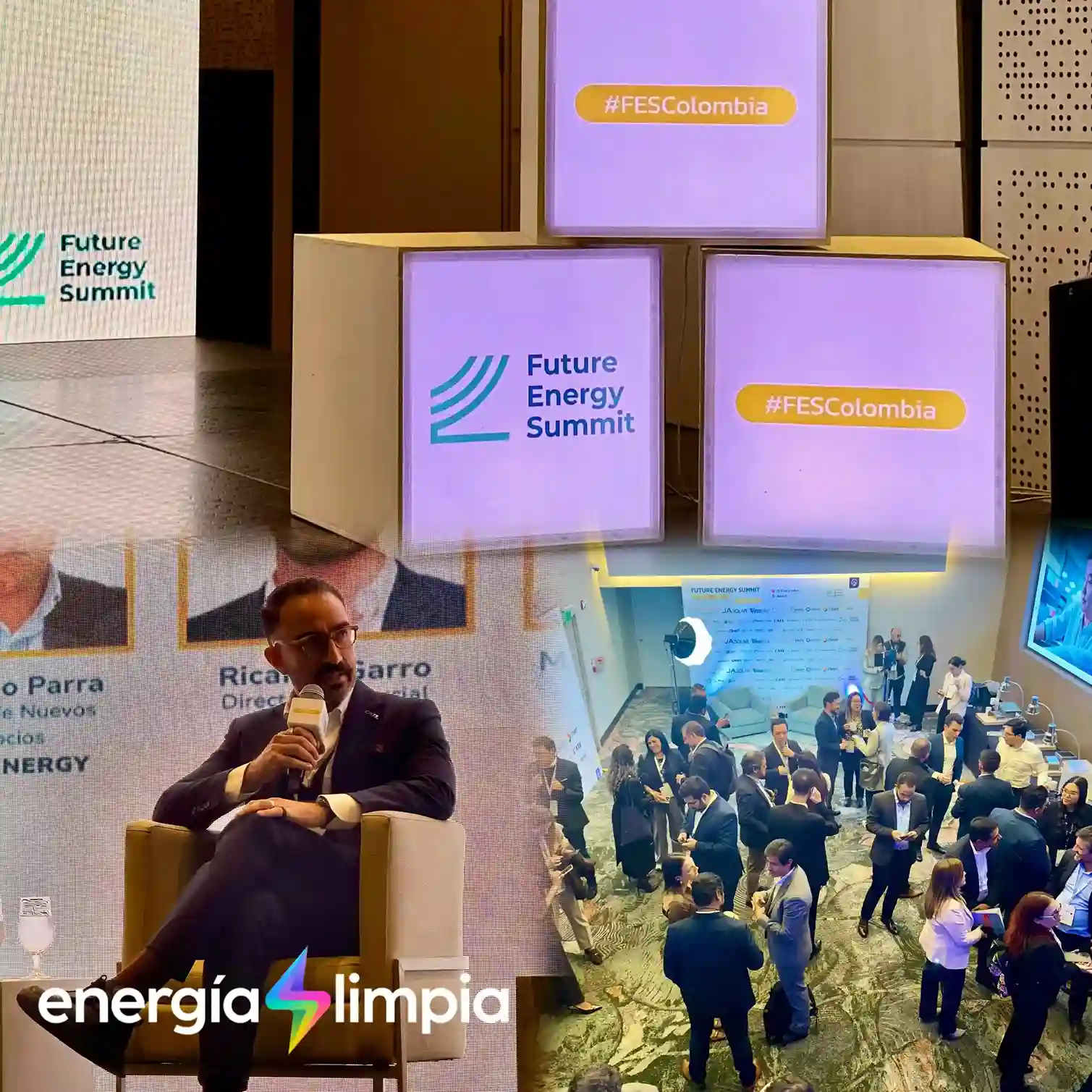
At the Future Energy Summit (FES) 2025, held in Bogotá, this complexity became a living dialogue. The conversations didn’t revolve around an abstract future but around an urgent present that demands execution and coherence.
Across engineers, regulators, investors, and innovators, one idea prevailed: the transition has already begun — but it will only move forward if Colombia aligns regulation, infrastructure, and trust.
Artificial intelligence also entered the debate as a crucial ally: a tool to predict failures, balance grids, and optimize consumption.
AI doesn’t replace human expertise; it amplifies it. The transition will not only be energetic — it will be cognitive.
A Plural Transition: Adding, Not Replacing
“Colombia needs energy — not only for decarbonization but for reliability and efficiency. Despite challenges, we’re proving it’s possible, and Colombians want renewables.”
— Alexandra Hernández, Executive President, SER Colombia
Her words captured the spirit of the Summit: the transition is not about substitution, but addition.
It’s an energetic addition — more technologies, more actors, more resilience.
Héctor Núñez (Sungrow) brought pragmatism to the table:
“The problem isn’t technical. It’s about permits and timing. If transmission lines don’t grow at the same pace as plants, reliability will be at risk.”
And Laura Benages (Grupo Elecnor) added:
“Energy leadership isn’t measured by speed, but by consistency. Anticipating, planning, and optimizing will be as vital as building new megawatts.”
Artificial Intelligence and Data: The New Nervous System
Innovation no longer resides only in physical infrastructure — it lives in information.
Smart grids, predictive algorithms, and digital twins are now essential to the electricity system.
As Miguel D’Alessio, CEO of Siemens Colombia, explained:
“We’re entering an era where the intelligence of the system will be as important as its installed capacity. Without real-time data, the grid is blind. AI doesn’t replace engineering — it makes it more precise, safer, and more human.”
Data management will be the true engine of energy stability.
In Colombia, the digitalization of networks and the use of AI in predictive maintenance are already reducing costs and preventing outages.
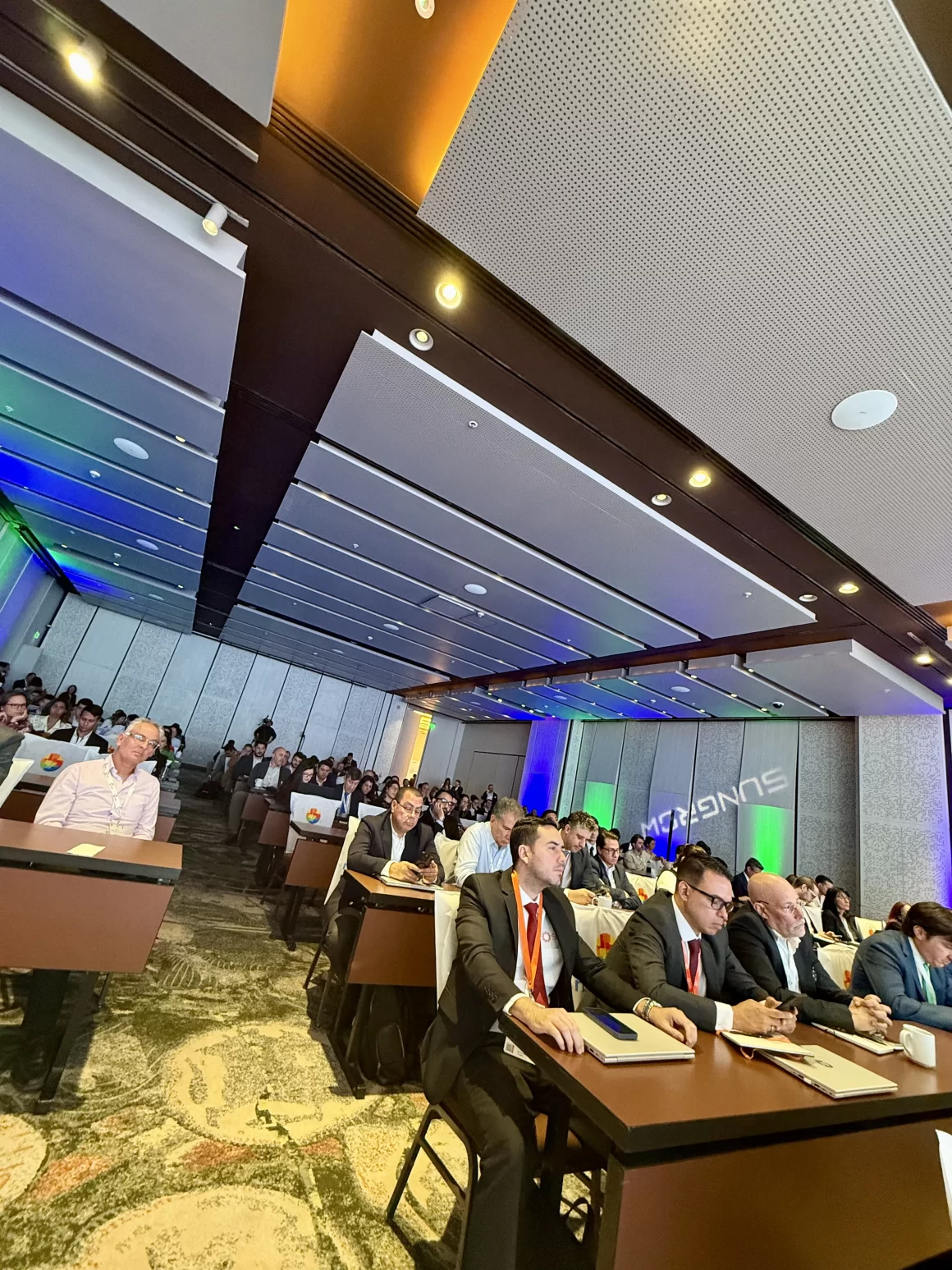
Attendees at the Future Energy Summit 2025 in Bogotá — a meeting point where regulation, innovation, and clean energy converged.
Storage: The Balancing Point
If there was a shared conclusion at the FES, it was this: without storage, there is no transition.
BESS (Battery Energy Storage Systems) are no longer experimental — they’re a strategic necessity.
Freddy Mendoza (Risen) summed it up:
“The technology is here. Costs are down, lifespans are longer. What’s missing is stable regulation and trust signals to unlock financing.”
A new CREG proposal aims to recognize BESS as grid assets and remunerate their services. If approved, it will enable more solar and wind integration, stabilize frequency, and reduce losses.
Distributed Generation: Power from the Ground Up
The transition is also written from rooftops, farmlands, and communities.
Camilo Jaramillo, founder of Hybrytec, expressed it clearly:
“This market is just taking off. The regulation allows us to operate, and the opportunities are huge. If you’re thinking of entering, do it now — projects are closing. Colombia is ready to raise the limit to at least three or five megawatts. Self-generation has grown for a decade regardless of politics, and distributed generation will follow that path.”
His message transcends the technical: democratizing energy means empowering citizens, companies, and territories to become active producers.
Decentralization is no longer an option — it’s a destiny.
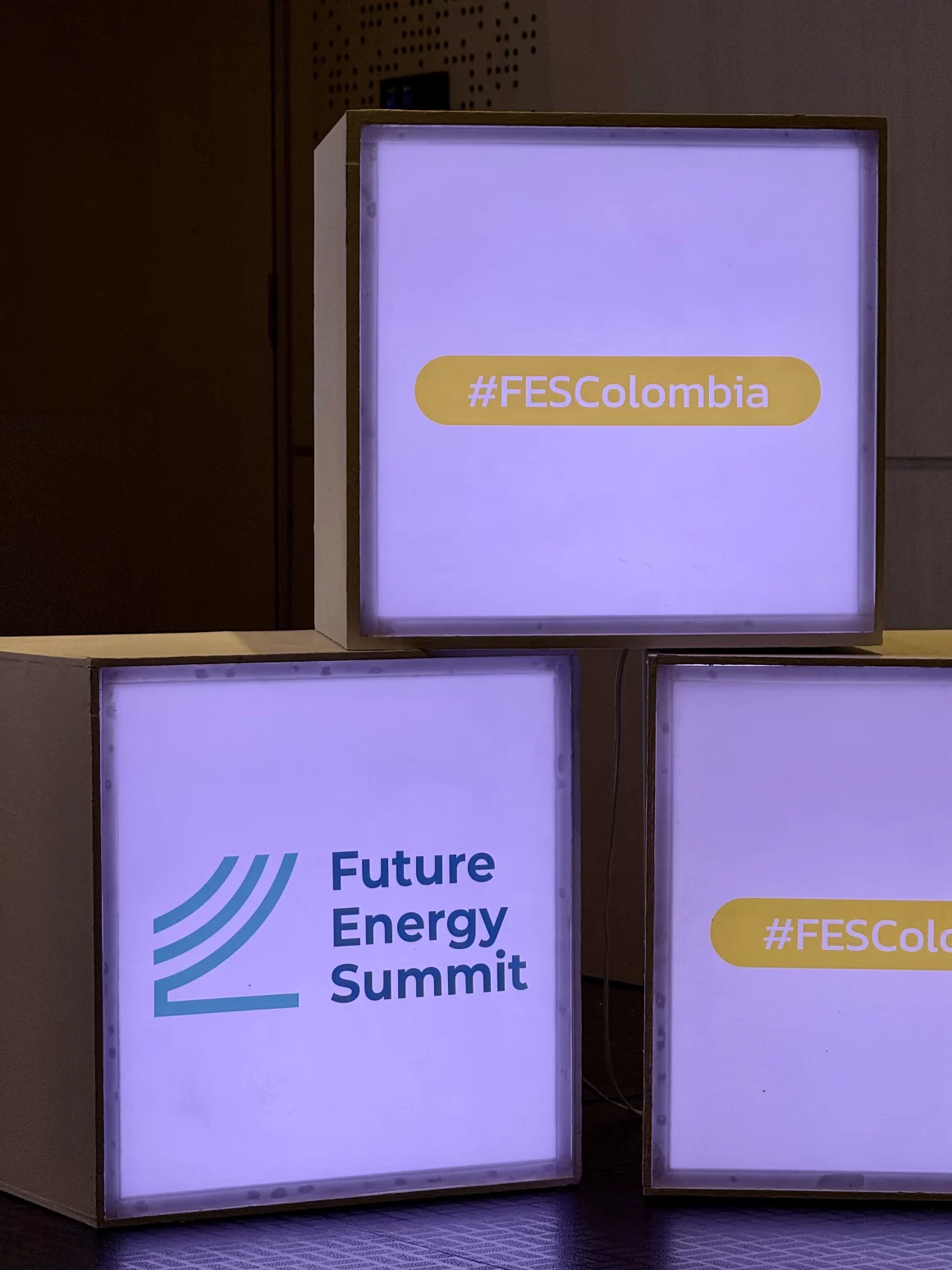
The agenda of FES2025 revolved around action and execution — from speeches to real energy.
Panelists and experts agreed that Colombia’s energy future will be built on trust, regulation, and technological innovation.
Regulation and Trust: The Invisible Infrastructure
“What threatens the sector today isn’t technology, but the loss of trust. Without legal certainty and stable rules, there will be no financing or execution.”
— Amylkar Acosta, Former Minister of Mines and Energy
Without regulatory stability, auctions stall and projects cool down.
With it, Colombia can attract green capital, innovate, and plan beyond political cycles.
Trust — that invisible word — has become the country’s scarcest and most decisive resource.
A Present Energy
From the Hilton’s conference hall, surrounded by engineers, financiers, and community leaders, it became clear that the question is no longer if Colombia will advance — it’s how fast.
Projects exist. Contracts are being signed. Technologies are being tested.
Beyond megawatts, something else drives this movement — the human energy that powers technology.
If the private sector, government, investors, consumers, and communities each play their part, clean energy will no longer be an ideal — it will be a reality.
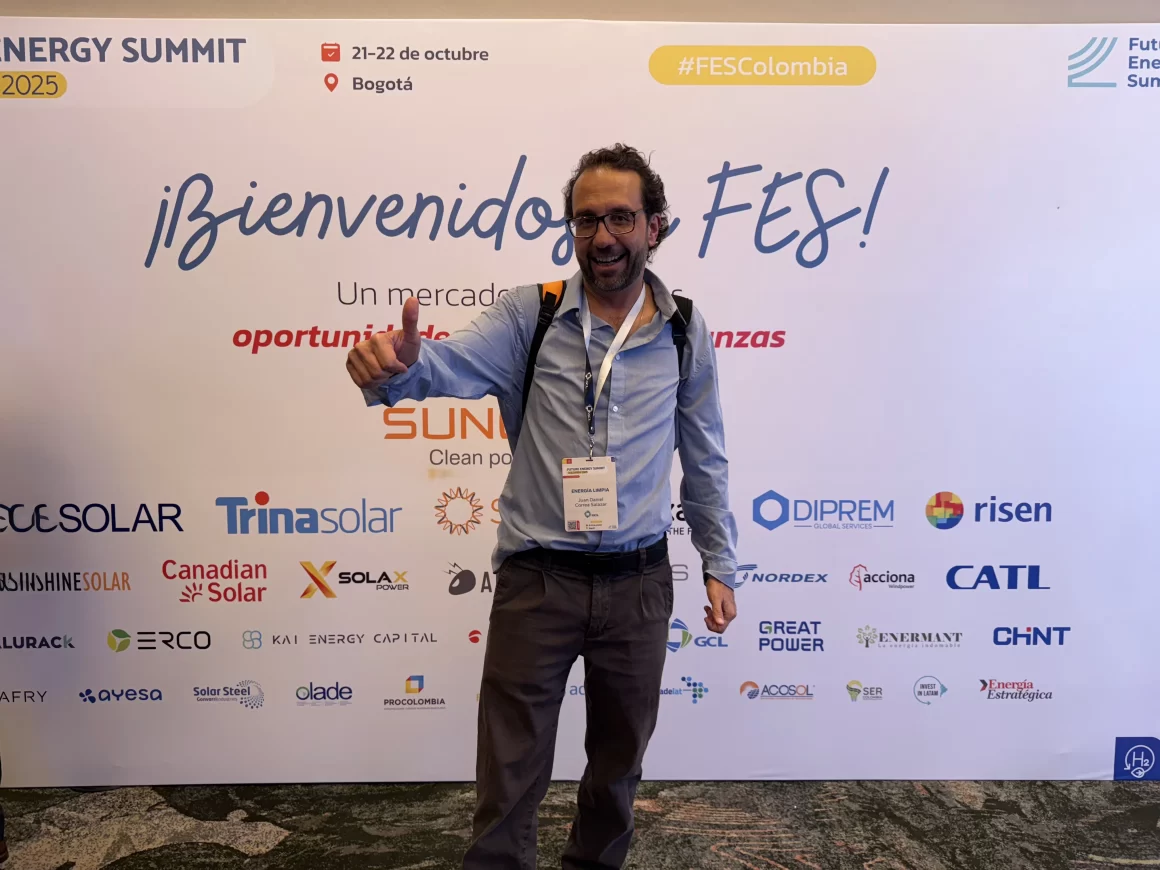
Juan Daniel Correa, Editor of Clean Energy, during the Future Energy Summit 2025 — where innovation, sustainability, and energy met to shape Colombia’s transition.
Glossary for Navigating the Transition
- BESS (Battery Energy Storage Systems): Battery systems that store and deliver energy, stabilizing the grid.
- CAPEX / OPEX: Capital expenditures vs. operational costs; their balance defines project viability.
- Hybridization (PV + BESS): Solar plants combined with storage.
- Demand response: Flexible consumption to reduce peaks and optimize costs.
- Reliability charge: A fee ensuring energy availability in emergencies.
- Grid-forming / Synthetic inertia: Technologies that stabilize renewable grids.
- Distributed generation: Energy produced near the point of consumption.
- Transmission: The critical infrastructure that connects generation and demand.
- Energy addition: The concept of adding technologies instead of replacing them abruptly.
- AI energy systems: Artificial intelligence applied to grids, consumption, and maintenance.
Conclusion
The Future Energy Summit 2025 confirmed that Colombia’s energy transition is no longer a promise — it’s a process.
The challenge lies not in resources, but in aligning regulation, infrastructure, and execution.
Colombia has natural, technological, and human energy. What remains is to connect it — with method, attitude, and action.
At Clean Energy, we’ll keep observing, narrating, and participating, because energy — when shared — multiplies.