
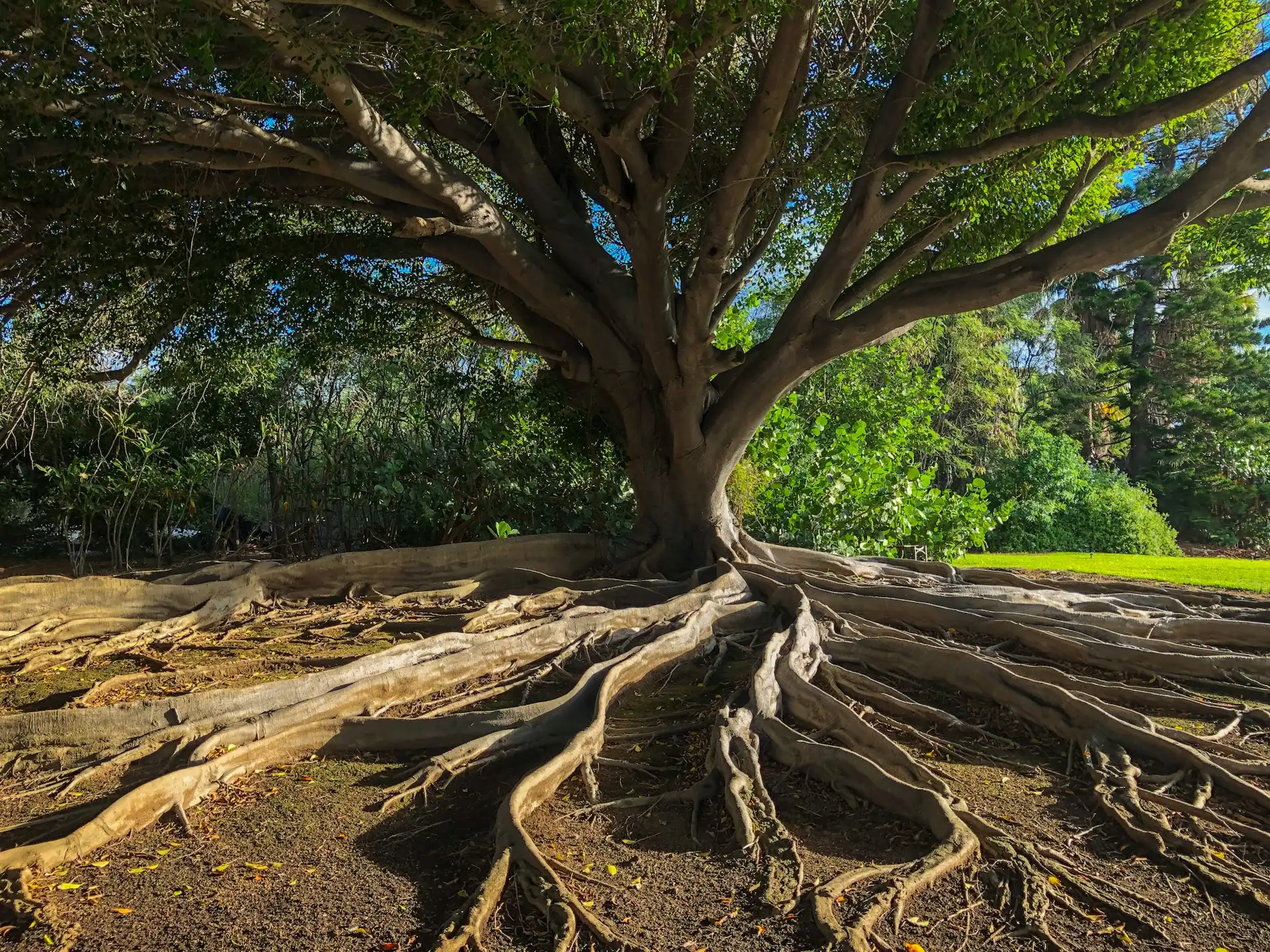
For too long, we fed the crops. It is time to feed the soil again.
For much of the last century, agriculture focused on producing more. Improved seeds, fertilizers, mechanization, and new technologies transformed farming and helped feed a growing population.
In that transformation, something quiet happened.
We began to take agriculture’s most valuable asset for granted.
The soil.
We assumed it would always be there, holding each harvest, regulating water, storing carbon, and quietly sustaining life. While we perfected agriculture above the surface, the soil began to deteriorate beneath our feet.
Today, we know the consequences.
Around 95% of the food we consume depends on soil, and a significant share of the world’s soils shows some degree of degradation. Erosion, loss of organic matter, and declining biological activity reduce the soil’s ability to retain water, store carbon, and sustain harvests over time.
Soil degradation rarely happens overnight. It is an accumulated process that, by the time it becomes visible, may have already compromised years — even decades — of fertility.
The question is no longer how much a hectare can produce.
The question is how much future that soil still holds.
Living soil
Fertile soil is not just dirt.
It is a living ecosystem.
Millions of microorganisms transform organic matter, recycle nutrients, form humus, and build the structure that allows soil to store water, exchange minerals, and sustain plant life.
When that network loses balance, the soil loses resilience. It compacts, stores less water, loses biodiversity, and requires more interventions to achieve the same results.
Restoring that capacity will be one of agriculture’s most important tasks in the decades ahead.
Feeding the soil
That conviction gave rise to ARRE – Regenerative, Resilient and Effective Agriculture, an initiative led by Andrés Ruiz Worth, who has developed much of his professional career around rice cultivation. Years of field experience led him to a simple conclusion: behind every strong harvest, there is soil that works.
From that idea came Excélsior, a high-performance soil conditioner designed to strengthen the biological processes that sustain natural fertility.
Its formulation combines anaerobically fermented organic matter, plant fiber, phosphate rock, leonardite, and activated biochar. Rather than simply adding nutrients, it seeks to restore the soil’s ability to store, transform, and make them available to plants again. Its purpose is not only to feed the crop, but to give the soil the conditions it needs to sustain the life behind every harvest.
One of its key components is biochar. Its porous structure hosts microorganisms, water, and nutrients, while helping stabilize carbon over long periods. Integrated into Excélsior’s biological process, it contributes to stronger soil activity and greater resilience under increasingly demanding conditions.
The same starting point
Regenerative and conventional agriculture are often presented as opposing models.
All agriculture begins in the same place: the soil.
It is not surprising that a solution like Excélsior emerged from the world of rice. Few crops demand so much from the soil: its capacity to store water, preserve structure, and keep its biology active.
Maintaining high productivity requires more than a good seed or efficient agronomic management.
It requires soil capable of responding, harvest after harvest.
Rice makes visible a challenge shared by nearly every productive system today.
Caring for soil is no longer just an environmental practice.
It is the foundation of more efficient, more resilient agriculture, capable of sustaining productivity over time.
Producing and regenerating are no longer separate paths.
Today, they are part of the same strategy.
Back to the origin
Agriculture now speaks of artificial intelligence, sensors, automation, and precision farming.
All of them will continue transforming the field.
None of them will replace healthy soil.
Because that is where everything begins.
That is where water infiltrates, carbon remains, biodiversity thrives, and productivity endures.
The next agricultural revolution may not come from a new technology.
It may begin with an idea as simple as it is powerful: feeding the soil again.
Because soil was never just another resource.
It was always the origin of everything.